As the largest industry meeting in the German-speaking world, this year's Geothermal Congress (DGK) offered a wide range of presentations and workshops on the topics of business and research, near-surface, medium and deep geothermal energy. The DGK is organized by the German Geothermal Energy Association (BVG). This year's main scientific partner was the German Research Center for Geosciences (GFZ).
HNU researcher explores acceptance of geothermal energy and generates recommendations for action
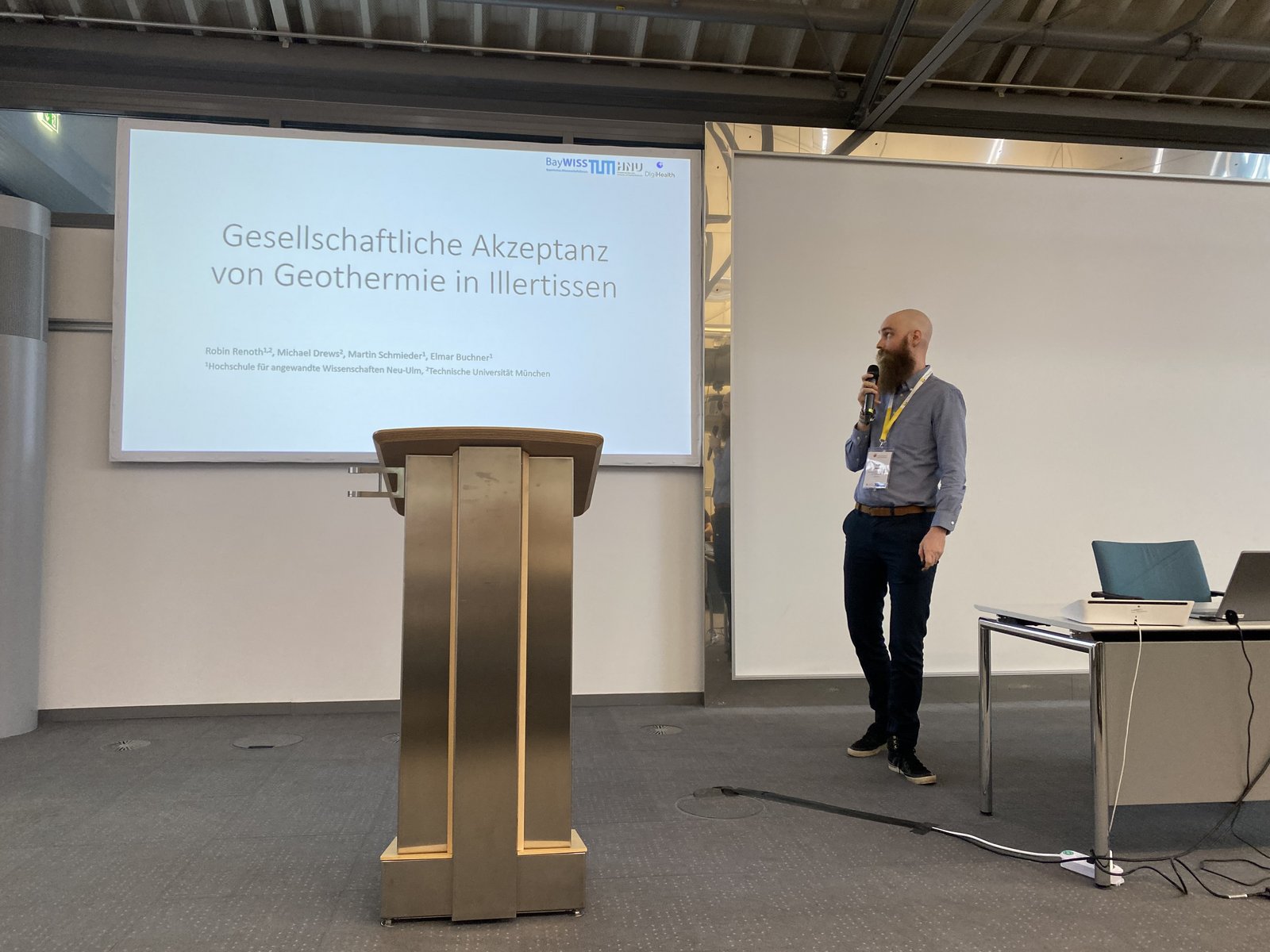
Robin Renoth, research assistant and doctoral student at the DigiHealth Institute at HNU, presented his research findings in the session “Municipal heat planning and acceptance”. In a lecture on the social acceptance of geothermal energy in Illertissen, he explained the extent to which not only the geological but also the social conditions must be in place for such projects. He provided insights into the initial results of an interview study that he is currently conducting in the small Bavarian town of Illertissen. The study was preceded by a literature study.
Using guided interviews, Renoth records the perspectives of different stakeholder groups - from citizens and city councillors to local companies - on the topic of geothermal energy and links these to possible solutions proposed by the interviewees. In the first interviews, the topics of communication, participation, transparency, financing, political circumstances and knowledge about geothermal energy played central roles. Robin Renoth plans to use the results of the interview study to create an acceptance profile for the small town using Illertissen as a case study. According to the researcher, this also has added value beyond the region: around 10 percent of municipalities in Germany have the structure of a small town, meaning that the findings from the Illertissen case study can easily be transferred to other regions in Germany.
Contact
Robin Renoth