
The interview partners
Prof. Dr. Patrick Da-Cruz is Professor of Business Administration and Healthcare Management at the Faculty of Healthcare Management at Neu-Ulm University of Applied Sciences (HNU) and Academic Director of the MBA program Leadership and Management in Healthcare.
Before joining the HNU, Mr. Da-Cruz worked for renowned strategy consultancies in the pharmaceutical/healthcare sector and in management positions in companies in the healthcare industry in Germany and abroad.

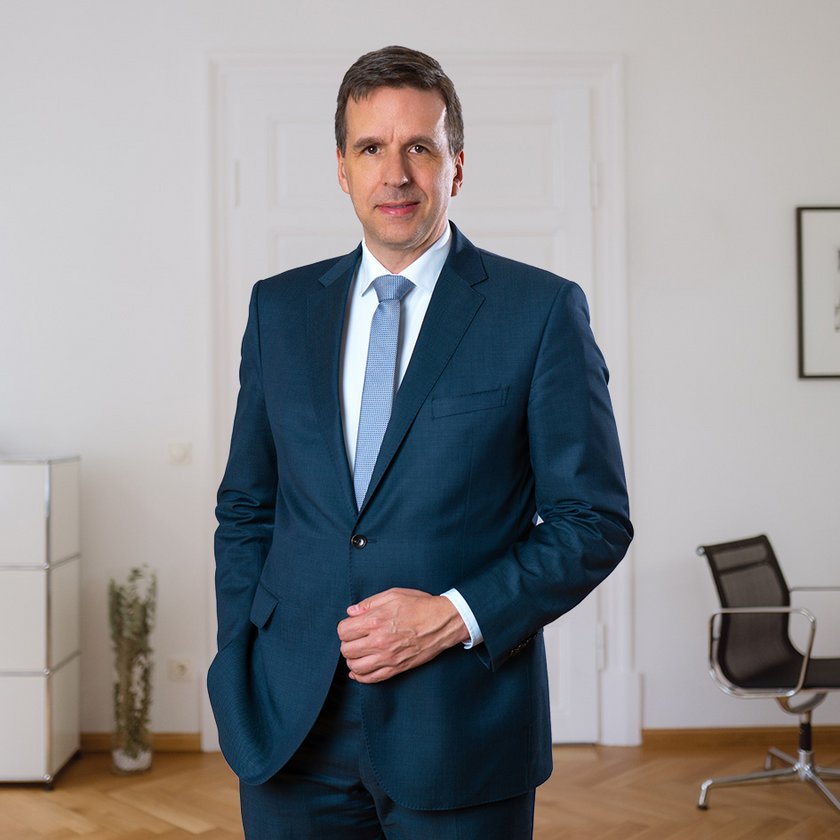
After studying business administration at the University of Bayreuth, Jan Hacker initially worked for Rhön-Klinikum AG, Bad Neustadt. In 2000, together with Prof. Dr. Peter Oberender, he founded Oberender & Partner in Bayreuth. Jan Hacker was a managing partner at this firm. From 2005, he was a member of the Management Board of EconoMedic AG, and since the merger of EconoMedic AG and Oberender & Partner to form Oberender AG, he has been Chairman of the Management Board of Oberender AG.
You have just published the Trend Report 2024 - M&A in the hospital market. What are the key findings of this study?
Jan Hacker: The market for acute hospitals was very challenging last year. A general significant deterioration in the economic situation, numerous insolvencies and no clear healthcare policy perspective on how things will improve again have led to great uncertainty. This has had a dampening effect on traditional hospital transactions. However, there have been a number of consolidations within provider groups and disposals resulting from insolvencies, meaning that a number of transactions have taken place again, albeit with a slight downward trend.
What is the current financial situation of the hospitals? What implications does the financial situation have for transaction activity?
Jan Hacker: German acute hospitals are probably in the biggest economic crisis of recent decades. As a result, the number of hospital owners who can imagine or are actually considering a sale has naturally increased. On the other hand, buyers have become much more cautious for the same reasons, with the result that there are now clinics for which there are no longer any interested parties. A few years ago, the situation was very different.
What impact have the recent hospital reforms had on M&A activity?
Jan Hacker: The hospital reforms that have not taken place are more likely to have an impact. Despite intensive political discussions, the federal and state governments have not yet been able to reach an agreement, so the market as a whole is currently in a kind of regulatory rigidity. The next few months will probably have to show whether fundamental hospital reform is even possible in this legislative period. In addition, the current Minister of Health has not yet followed up his announcement at the end of 2022 to significantly restrict the MVZ status of hospitals for financial investors with any action. Confidence is slowly returning that this will not change in the remainder of the legislative period.
To what extent are the topics of digitalization and AI influencing M&A activities in the hospital sector and other segments of the healthcare sector?
Jan Hacker: Unfortunately, German hospitals are a little behind the rest of the world when it comes to digitalization. The KHZG has not fundamentally changed this either. However, the significantly increasing requirements (e.g. Kritis, NIS-2) are now increasing the pressure for liability reasons. The degree of digitalization of a hospital is therefore increasingly becoming an object of scrutiny in transaction procedures.
Looking much further into the future, AI naturally has the potential to ease the burden of patient care and thus contribute to solving the major staff shortage in the white areas. However, this is not an effect that can be expected in the short term.
What trends and developments in M&A in the healthcare sector do you expect in the future? Are there specific market segments or regions in which an increase or decrease in M&A activities is to be expected?
Jan Hacker: If the legal framework conditions remain unchanged, the demand for vehicles for medical care centers will increase again. And the pressure to consolidate in the traditional hospital business will also remain high or increase. However, if it is not possible to make the operation of the majority of German hospitals profitable again, it will be difficult to find investors.
Small care hospitals, particularly in or near urban centers, will continue to be the losers of current developments. The majority of these hospitals will not be sold with an unchanged business model, but rather converted into more outpatient and care-oriented healthcare centers.
Thank you very much for the interview!
The content and statements presented in the interviews reflect the perspective of the interviewees and do not necessarily reflect the position of the editorial team.


