
The interview partners
Prof. Dr. Patrick Da-Cruz is Professor of Business Administration and Health Management at the Faculty of Health Management at Neu-Ulm University of Applied Sciences (HNU) and Academic Director of the MBA program in Leadership and Management in Healthcare. Before joining HNU, Mr. Da-Cruz worked for renowned strategy consultancies in the pharmaceutical/healthcare sector and held management positions in healthcare companies in Germany and abroad.

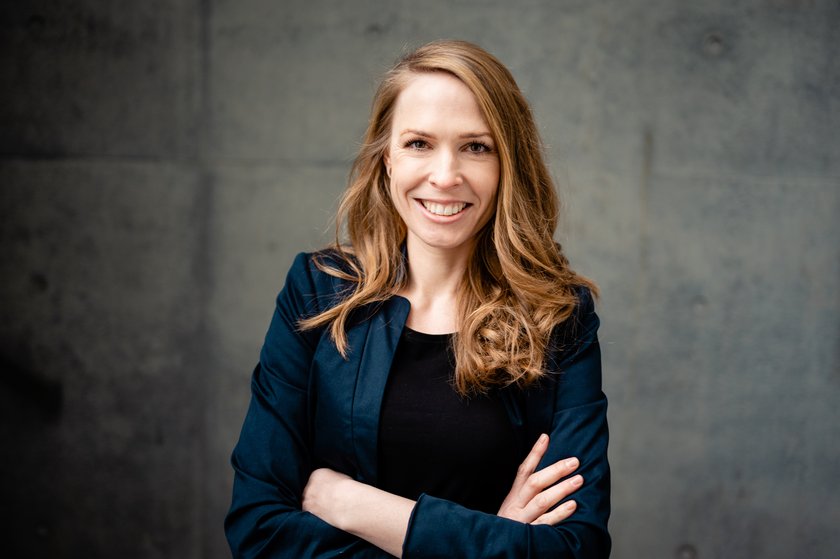
Dr. Johanna Ludwig is a specialist in orthopedics and trauma surgery with a Master of Science degree (Oxford). Her work combines clinical experience, systemic thinking, and entrepreneurial creativity. She sees her focus on continuing education and digitalization as key to a form of medicine that is humane, effective, and sustainable. As an author, she has provided key impetus, including with the reference book “Competence-based Continuing Education” (Elsevier, 2025) and the career guide “Ways out of the Clinic: The Guide to Careers Beyond the Hospital Bed.” With her multi-award-winning start-up Asystole, she is bringing gamification to medical continuing education. Professionally, she already looked beyond the horizon during her clinical work and now heads the healthcare department at gematik, where she contributes to efficient digitalisation from a healthcare perspective.
What requirements will be placed on chief physicians in 2030?
Dr. Johanna Ludwig: We are in the midst of a paradigm shift. The requirements for chief physicians will change fundamentally by 2030—not only professionally, but above all culturally.
Today, hospitals compete with work environments that offer flexibility, remote work, and self-efficacy. The rigid pace of everyday hospital life quickly seems outdated. Those who want to lead tomorrow must respond to these new expectations. In addition to medical excellence, leadership skills, economic understanding, and the ability to integrate innovations into hospital structures in a meaningful way are therefore becoming increasingly important.
Successful chief physicians are becoming bridge builders—between people, disciplines, and systems. They need not only a good understanding of medicine, but also of people and organizations in transition.
What career opportunities exist beyond traditional patient care?
Dr. Johanna Ludwig: First, I would like to make one thing very clear: working at the patient's bedside deserves our utmost respect. As a surgeon, I spent many years directly involved in patient care – in the operating room, on night shifts, talking to patients and their families. This work is intense, intimate, sometimes incredibly demanding – and at the same time deeply meaningful. It has shaped me as a person. I know of hardly any other profession in which so much immediate trust is placed, in which decisions so directly affect lives. Those who work in direct patient care do so with heart and mind, and often under conditions that go far beyond what would be considered normal in other industries.
At the same time, there are other professions that have a significant impact. Whether in the development of new therapies, medical technology, digital health, or teaching, there are many areas where medical professionals can make a significant difference. For example, those who conduct research into innovative therapies can help thousands or millions of people without ever coming into direct contact with them. Or those who are involved in teaching can multiply their knowledge through each generation of students.
Management, consulting, and politics also offer physicians the opportunity to have a systemic impact—beyond individual patient cases, but with a view to the big picture.
Healthcare policy in particular urgently needs more voices from the field. Doctors who not only have a say, but also help shape policy – based on experience, attitude, and responsibility.
Which skills from patient care are particularly helpful when moving into management or consulting?
Dr. Johanna Ludwig: In fact, many of the skills we develop in direct care are valuable, especially in leadership or consulting roles.
We learn to make decisions under uncertainty, to set priorities, to communicate—empathically, clearly, and often under time pressure. We maintain an overview, even when things get tight. And we know how to deal with people who find themselves in exceptional situations.
These skills are invaluable—whether in strategy development, change management, or team leadership.
The important thing is that anyone who decides to take a new path should do so out of conviction, not frustration. If I leave the clinic because I actually enjoy working as a doctor but the conditions are poor, I run the risk of losing sight of my real motivation. It is better to fight for change within the system—that is more fulfilling and often more effective in the long term.
What skills do you need to be a successful doctor outside of patient care?
Dr. Johanna Ludwig: First of all, doctors have a bunch of “transferable” skills—way more than they often realize. Efficiency, discipline, crisis management, clear communication, resilience, teamwork—these are skills that matter in any demanding work environment.
However, depending on the field you move into, there will naturally be new technical requirements—whether it's project management, IT skills, business administration, or regulatory expertise. The key thing is that these things can be learned. What holds many people back is not a lack of talent, but too narrow a view of themselves. Just because I studied medicine doesn't mean I can't take on other roles.
You don't have to be perfect at everything right away. Outside the clinic, you can also learn, grow, and fail—usually with much less serious consequences than in the direct care of patients.
What advice would you give to young colleagues who have to choose between a career in medicine and alternative career paths?
Dr. Johanna Ludwig: The biggest mistake is to start with the possible jobs. If you only ask yourself, “What else could I do?”, you will quickly end up in a jungle of options – but without an inner compass.
So my advice is: start with yourself. Not with job boards. Not with other people's expectations. But with your values: What is really important to you in life? What gives you meaning? What do you want to achieve – regardless of whether you do it in a lab coat, in a lecture hall, or in a project team? Once you have clarified this for yourself, you can evaluate much more specifically which working environments suit you – and which do not.
If you love the medical profession but find the conditions frustrating, consider whether you want to be part of the solution. Change in the system often starts with the people who stay and do something different. That takes more courage than withdrawing. And it has an impact – on yourself and on those who come after you. If you feel that you want to move into other areas, don't do it out of a sense of lack, but out of clarity. Make a decision for something, not just away from something.
If you are truly curious about new fields, gather impressions. Observe, network, ask questions—but do so in a structured manner. Write down what drives you, what is important to you, and where you want to go in the long term. One tool I highly recommend for this is “Ikigai”: it connects your passion, your strengths, what the world needs, and what you can get paid for. With it, you can suddenly view the many job options that Google provides with depth and direction.
In the end, it's not about the perfect job title – it's about living a life that feels right for you. And that doesn't start with a job offer – it starts with you.
Thank you very much for the interview!
The content and statements presented in the interviews reflect the perspective of the interviewees and do not necessarily correspond to the position of the editorial team.


