
The interview partners
Prof. Dr. Patrick Da-Cruz is Professor of Business Administration and Health Management at the Faculty of Health Management at Neu-Ulm University of Applied Sciences (HNU) and Academic Director of the MBA program in Leadership and Management in Healthcare. Prior to joining HNU, Mr. Da-Cruz worked for renowned strategy consultancies in the pharmaceutical/healthcare sector and held management positions in healthcare companies in Germany and abroad.

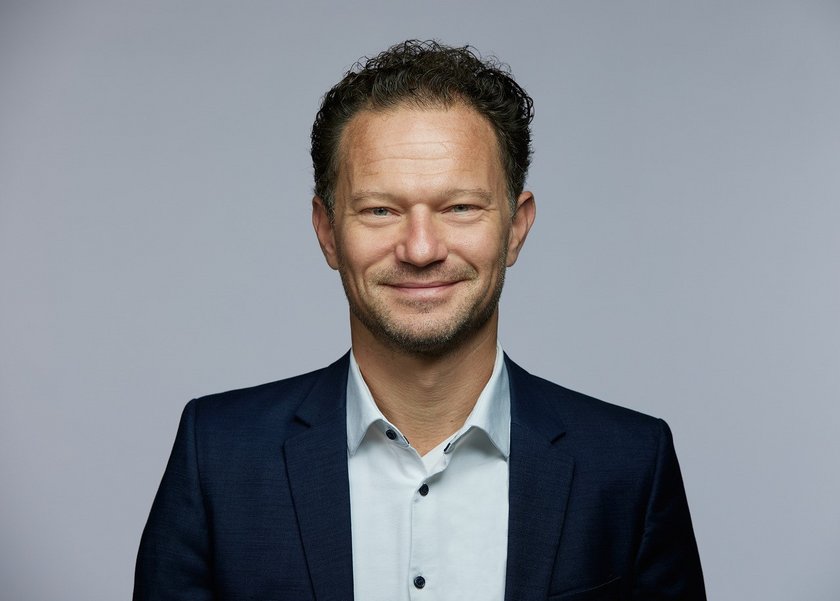
Prof. Dr. Marc Baenkler holds a doctorate in medicine and a master's degree in Business Health Administration from Friedrich-Alexander University Erlangen-Nuremberg. He is also a professor of hospital management at Medical School Hamburg. Most recently, Prof. Dr. Baenkler was managing director of the Convivo Group, based in Bremen. Prior to that, he held various positions at Helios for over ten years, including Regional Managing Director North. Since September 2022, he has been CEO Germany of the MEDIAN Group, one of Europe's leading providers in the field of medical rehabilitation, mental health, and sociotherapy, and is thus responsible for the group's more than 120 clinics in Germany.
Which digital technologies have become established and proven themselves in rehabilitation?
Prof. Dr. Marc Baenkler: In medical rehabilitation, digital documentation and control systems, telemedicine applications, and digital therapy offerings have become particularly well established. Today, digital rehabilitation planning systems enable more efficient, cross-sector care and transparency throughout the entire course of therapy. In the future, data from electronic patient records could be used to create even more personalized therapy paths.
Tele-rehabilitation—for example, in the form of highly personalized aftercare programs such as our in-house development MyMEDIAN@Home—has proven to be an effective tool, especially in follow-up treatment. Virtual reality-based therapy systems, digital training devices with real-time biofeedback, and AI-supported assessments are also being increasingly integrated and are showing positive effects in terms of patient motivation and therapy success.
How can digitalization contribute to greater individualization of rehabilitation measures and thus increase the success of therapy?
Prof. Dr. Marc Baenkler: Digital applications enable significantly more precise and individualized rehabilitation management. Through digital surveys, continuous monitoring, and AI-supported analyses, therapy plans can be better adapted to the actual needs, progress, and resources of patients.
Personalized exercise apps, digital diaries, and feedback systems promote personal responsibility among rehabilitation patients and also make therapy success measurable—both for the patients themselves, for whom their visible progress acts as a motivational booster to stick with the therapy, and anonymously for our clinic teams, who can continuously optimize therapy paths.
Digital aftercare, such as that provided by our MyMEDIAN@Home app, begins after inpatient rehabilitation in a clinic. The app focuses on digitally supported aftercare with many interactive exercises and knowledge content—always closely monitored by the therapists at our Digital Aftercare Center in Düsseldorf. Thanks to the approval granted this year by the German Pension Insurance (DRV) for the integration of our aftercare app into standard care, all somatic patients of the DRV can now use the MyMEDIAN@Home app for aftercare for the first time – regardless of whether they have completed inpatient rehabilitation with another provider.
We have observed that contact with experienced therapy teams in digital aftercare can reduce the risk of relapse and consolidate therapy success. Overall, this makes rehabilitation not only more individualized, but also more sustainable.
Where do you see the biggest hurdles to digitization in rehabilitation?
Prof. Dr. Marc Baenkler: In my view, the biggest challenge at present is structural and regulatory fragmentation. Compared to acute medicine, the rehabilitation sector is significantly less integrated into digital care and financing architectures. Uniform interfaces, interoperable systems, and viable financing models are often lacking—especially for digital aftercare or hybrid models.
In addition, there is an increased need for training among skilled workers and high initial investment costs in IT infrastructure. Last but not least, digitization requires a cultural change: digital processes must be seen as an opportunity and not as a burden. Targeted change management strategies are needed here.
Fundamentally, politicians need to give greater recognition to the essential role of rehabilitation as the third pillar of the German healthcare system.
How is the role of therapists changing in an increasingly digital rehabilitation world?
Prof. Dr. Marc Baenkler: The role of therapists is changing from the classic “exercise instructor” to digitally trained guides, coaches, and data-based decision-making companions. Digital tools are by no means replacing human contact – on the contrary, they are creating new spaces for empathy, motivation, and targeted intervention.
Therapeutic expertise is being supplemented by digital skills: data interpretation, remote support, and working with digital forms of therapy and platforms are increasingly becoming part of the professional self-image. It is crucial that digitalization is understood as an extension of therapeutic effectiveness – not as a substitute for human care.
How can rehabilitation clinics cooperate effectively with start-ups or universities to develop and implement targeted digital solutions?
Prof. Dr. Marc Baenkler: Start-ups and universities are important innovation partners for rehabilitation clinics—especially when it comes to future-oriented, application-oriented, and user-centered solutions. Successful collaborations arise when clinical and therapeutic practice is systematically incorporated into development processes – for example, through joint pilot projects, test fields, or real-world laboratories.
In order to bundle our internal pilot projects and external collaborations, we launched the MEDIAN Group Lab last year, which provides an overarching umbrella for all our research and innovation projects in Germany, the UK, and Spain.
We focus on long-term innovation partnerships that combine research, product development, and implementation. Universities contribute scientific excellence and methodological depth, start-ups contribute agility and technological expertise, and clinics provide care expertise and ensure applicability through patients. This triangle holds great potential for modern, digital rehabilitation.
MEDIAN, for example, launched a large-scale pilot project to comprehensively investigate the use of VR in the treatment of phobias or addiction disorders in rehabilitation. Following the successful pilot, VR therapy has now been rolled out across many of our clinics, and patients are demonstrably benefiting from it.
Another project is an internal study to investigate whether biomarkers in the human voice can help therapists in the diagnosis of depression as objective parameters.
Thank you very much for the interview!
The content and statements presented in the interviews reflect the perspective of the interviewees and do not necessarily correspond to the position of the editorial team.


