Following last year’s inaugural event at OTH Amberg-Weiden, this year’s meeting took place in Landshut. In addition to the host university, numerous representatives from HNU and OTH Amberg-Weiden attended, including faculty members, doctoral candidates, administrative staff, and other interested parties. The university administrations were represented by the vice presidents in attendance: Prof. Dr. habil. Elmar Buchner (HNU, Director of the Doctoral Center), Prof. Dr. med. habil. Aida Anetsberger (Landshut University of Applied Sciences), and Prof. Dr. Wolfgang Weber (OTH Amberg-Weiden).
The Importance of Cross-Campus Collaboration
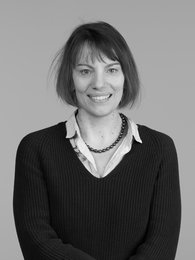
“The DIWAG doctoral program impressively demonstrates how collaborative research can be successfully organized at universities of applied sciences,” emphasized Prof. Dr. Aida Anetsberger. “Close collaboration between campuses is a key factor in this success.”
Following the opening remarks, Dr. Linda Klingler (Landshut Graduate Center) provided an overview of developments over the past year. Prof. Dr. habil. Elmar Buchner and Prof. Dr. Wolfgang Weber then discussed the origins and development of the doctoral college—particularly in the context of the application for the right to award doctoral degrees. The proposed extension of this right was also addressed. Dr. Kristina Klitzke (HNU) moderated the session.
Insights into AI and Interdisciplinary Research
A highlight was the lecture by Prof. Dr. Christian Cyron (Hamburg University of Technology, AI Ambassador of the Helmholtz Association) on the topic “Research and Society in the Age of Artificial Intelligence.” The discussion that followed underscored the high relevance of AI to the work of the doctoral college.
The subsequent presentations by the faculty members reflected the wide range of topics covered by the research group—from economic distribution research to animal welfare and the transformation of social institutions—and underscored its interdisciplinary focus.
Focus on Doctoral Students
In the afternoon, the doctoral students presented their projects in short pitches. Topics discussed in depth included the interaction between humans and AI, AI as a systemic actor in child and youth welfare, and questions regarding the internalization of identity processes within organizations.
Strengthening Interdisciplinary Collaboration
A roundtable discussion involving the five research clusters focused on the question, “How do we see ourselves as researchers?” The goal was to gain a better understanding of different academic perspectives and to further strengthen collaboration through mutual understanding.
In addition to the academic program, the meeting offered numerous opportunities for informal discussion. “Year after year, the annual meeting demonstrates just how valuable personal interaction is for advancing research and doctoral studies,” summarized Prof. Dr. Aida Anetsberger.
Now all eyes are on the next meeting: In 2027, the DIWAG Annual Meeting will take place at HNU.

Contact
Dr. Kristina Klitzke
Operational management for the DIWAG doctoral programme