
The interview partners
Prof. Dr. Patrick Da-Cruz is Professor of Business Administration and Healthcare Management at the Faculty of Healthcare Management at Neu-Ulm University of Applied Sciences (HNU) and Academic Director of the MBA program Leadership and Management in Healthcare.
Before joining the HNU, Mr. Da-Cruz worked for renowned strategy consultancies in the pharmaceutical/healthcare sector and in management positions in companies in the healthcare industry in Germany and abroad.

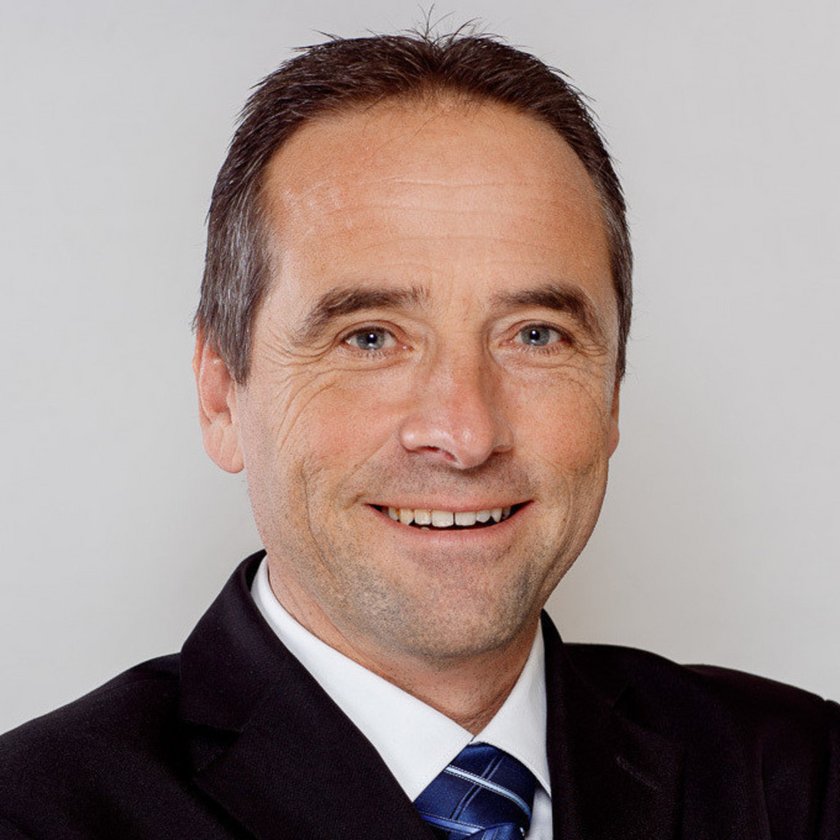
Ralf Bannwarth is a graduate engineer (FH) in medical technology with extensive experience in medical technology and healthcare IT. After working as a paramedic and completing his studies, he worked in medical technology equipment planning and at GE Healthcare IT, where he held various management positions. From 2010 to 2024, he was Head of Materials Management and, from 2018, Head of Purchasing and Medical Technology at Alb-Fils-Kliniken. Since 2025, he has been Head of Purchasing, Logistics and Medical Technology at Kliniken Ostalb. In 2019, he was also appointed to the editorial advisory board of the specialist magazine “Klinik Einkauf” published by Thieme Verlag.
What is meant by a technology or system partnership in the healthcare sector or hospital? How do these differ from other sectors?
Ralf Bannwarth: The term technology partnership refers to a long-term relationship between the medical technology industry and a hospital or hospital chain. Different goals are pursued with a technology partnership. For example, it can be about joint innovations, guaranteeing a stock of innovative devices, optimizing quality or improving cost-effectiveness. In the context of technology or system partnerships in the healthcare sector, the specific regulatory framework conditions of this sector must be taken into account. In some cases, these differ considerably from other sectors. One example of this is the handling of patient data.
What are the characteristics of technology and system partnerships between hospitals and medical technology companies? In which areas are technology and system partnerships already being used?
Ralf Bannwarth: At the ALB FILS clinics, where I worked until the end of last year, I realized many technology partnerships in medical technology. One example of this is the PARAT project (Partnership for Radiological Technologies). The aim of the project and the tender was a ten-year partnership in the field of radiological imaging. This included an investment concept (which device will be replaced in which year?), an innovation concept (what is the procedure if a device will only be delivered in x years and is not yet available?), a financing concept over the contract period and a maintenance contract for the delivered devices, but also for the devices in the inventory - even if these are from another manufacturer. This technology partnership was followed by similar projects in the areas of ultrasound, dialysis, patient monitoring and flexible endoscopy. The spectrum here has become ever broader in recent years.
What are the benefits of technology and system partnerships for hospitals?
Ralf Bannwarth: With these projects, we have contributed to the standardization of devices, platforms, interfaces and application interfaces, had only one contact person and one service team, created investment security with the financing concept and were able to use calculable variables in our business planning, i.e. reduce uncertainty in planning. At the same time, we have been able to achieve a significant cost advantage by bundling all devices. Not to forget the simplification in the area of public tenders, as we only had to carry out one large tender. A technology partnership concept also offers a hospital or hospital chain the opportunity to analyse an area holistically and develop a long-term concept for this area with a high degree of standardization. An example of this is the area of ultrasound diagnostics, where each department in a hospital traditionally has its own special supplier. If you take a holistic view of the area and create an overall concept, you can achieve significant success in terms of standardization, medical progress and cost-effectiveness.
What risks are associated with technology and system partnerships for hospitals? How can dependencies on one manufacturer be avoided?
Ralf Bannwarth: A technology partnership is a partnership for a long period of time. The risks that arise must be contractually secured; in principle, a technology partnership is a risk-sharing arrangement between industry and hospital for issues that may arise over a longer contractual period. The dependence on a manufacturer described above can be regulated, for example, by defining a certain proportion of third-party devices in the contract. If a device to be supplied cannot be delivered by the partner, there is a claim to a competitor's device to be supplied. The prerequisite for a successful project is that the partnership is worked on continuously and that all issues that arise are resolved jointly, be it a change of head physician, the closure or restructuring of individual areas, the establishment of new departments or the implementation of innovative therapies.
A key factor in minimizing risks is successful and close cooperation between the purchasing and medical technology departments and the user, i.e. in particular the medical and nursing staff. Only together and in close coordination combined with professional project management is it possible to act without frictional losses.
What goals do medical technology companies pursue with technology and system partnerships?
Ralf Bannwarth: The main goal of the medical technology industry is long-term customer loyalty. In concrete terms, this means that a contractor wants to retain a customer for a long period of time due to cut-throat competition. A key factor for the industry - as well as for hospitals - is that the cost of participating in tenders is significantly reduced by participating in a large-scale project. In addition, supplier standardization allows medical technology companies to offer and use service concepts much more effectively.
Thank you very much for the interview!
The content and statements presented in the interviews reflect the perspective of the interviewees and do not necessarily reflect the position of the editorial team.


