
The interview partners
Prof. Dr. Patrick Da-Cruz is Professor of Business Administration and Healthcare Management at the Faculty of Healthcare Management at Neu-Ulm University of Applied Sciences (HNU) and Academic Director of the MBA program Leadership and Management in Healthcare. Before joining the HNU, Mr. Da-Cruz worked for renowned strategy consultancies in the pharmaceutical/healthcare sector and in management positions in companies in the healthcare industry in Germany and abroad.

FH-Prof. Dr. Robert Mischak heads the eHealth Institute and is Chairman of the Department of Applied Computer Science at FH JOANNEUM. He also heads two degree programs (eHealth Bachelor and eHealth Master). He completed his degree in Mechanical Engineering - Management at the Vienna University of Technology. He also completed a Master's degree in Public Health in Switzerland. From 1992 to 1995, he was a research assistant at the Ludwig Boltzmann Institute for Epidemiology and Health Systems Research at the Karl-Franzens University of Graz. From 1995 to 2008, he worked as a senior employee at the Styrian hospital company KAGes and later at the private health insurance company Merkur in Graz. Since 2008, he has been a full-time lecturer at FH JOANNEUM in Graz and holds a professorship for business administration in healthcare.
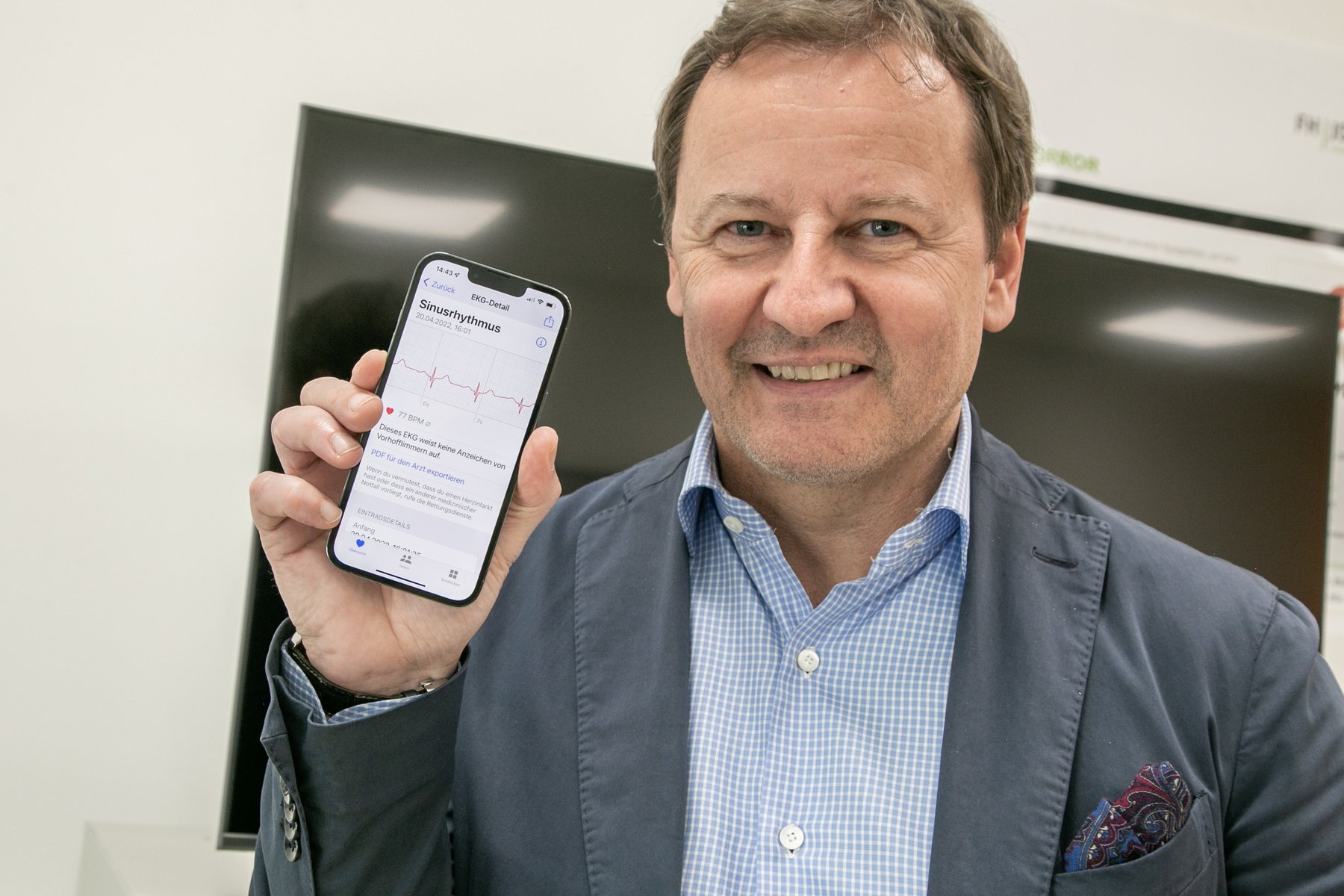
Digital health solutions are becoming increasingly important in healthcare, although there are sometimes considerable differences in the way these relatively new services are remunerated. What is the status quo with regard to remuneration models for digital healthcare solutions?
FH-Prof. Dr. Robert Mischak: In Austria, digital healthcare solutions are still the exception rather than the rule. We don't have anything like digital health applications (DiGA) that are paid for by health insurance on prescription. In most cases, health apps are free of charge for members of a particular insurance company. In the field of telemedicine, most services are remunerated in the same way as their analog counterparts, usually as individual services, sometimes as flat rates.
How do traditional remuneration structures need to evolve in order to adequately reflect new digital healthcare solutions in the healthcare sector?
FH-Prof. Dr. Robert Mischak: An important aspect is the underlying data and its processing (mostly administrative and medical data), which should be organized in standardized terminologies and ideally can also be used across sectors. This raises an important strategic question, namely whether medical data should also be used as billing data in one system or whether separate documentation should be provided. Ideally, in my opinion, billing data, which is less complex, should be derived from medical data and should be as automated as possible, because data collection should not be time-consuming for service providers. Ideally, medical data should therefore also be recorded automatically. This is technically possible via direct interfaces from measuring devices for vital parameters to speech-to-text systems for findings. Only the determination of diagnoses and therapies will ultimately remain a human task - even if help is provided by clinical decision support systems (CDSS). Quality assurance and billing of services by health insurance companies and others should also be largely automated. Subsequently, this routine data could be anonymized and automatically incorporated into health reporting.
What are the biggest challenges in implementing innovative remuneration models for digital healthcare solutions?
FH-Prof. Dr. Robert Mischak: As desirable as the standardization of medical data and billing data would be, it is difficult to implement in individual cases due to historically grown structures. In Austria, for example, there are different rules for primary care units (PVE) in each federal state, i.e. nine framework agreements for nine million inhabitants. Private health insurance has different service catalogs than social health insurance, etc. In addition, most remuneration systems focus on output rather than outcome and therefore sometimes set the wrong incentives for service provision. Models that take into account the quality of treatment (pay-for-performance) must also be able to adjust for risk. This is not easy from a methodological point of view.
In your opinion, what examples of best practice exist with regard to remuneration?
FH-Prof. Dr. Robert Mischak: I personally prefer capitation models. This means that the health insurance company pays the service providers for defined population groups, regardless of whether a service is required or not. This at least removes the incentive to provide unnecessary services because the service providers have an interest in low individual services or case numbers. In general, however, such a system would place great demands on the digital maturity of all players.
What about payment? Who can be considered as a payer? What role do insurance companies, the state, employers and patients play?
FH-Prof. Dr. Robert Mischak: This is a political question. In more libertarian systems, some things can be outsourced to the patient, but health insurance contributions would also have to be reduced or insurance models with a choice of deductibles and flexible benefits or restrictions to certain service providers would have to be offered. The state must guarantee the framework conditions for a functioning and financially viable community of solidarity (compulsory insurance, first aid for everyone, etc.). The effectiveness and efficiency of digital healthcare solutions should also be monitored. Employers should make their contribution in terms of digital workplace health promotion, but the tax and social security contribution allowances should also be increased. Patients should be involved in their own healthcare as much as possible. This means moving away from purely paternalistic repair medicine towards patients with better health literacy who are allowed to have a say in treatment decisions. Then they may also be prepared to bear the costs of digital healthcare solutions themselves.
Thank you very much for the interview!
The content and statements presented in the interviews reflect the perspective of the interviewees and do not necessarily reflect the position of the editorial team.


