
The interview partners
Prof. Dr. Patrick Da-Cruz is Professor of Business Administration and Healthcare Management at the Faculty of Healthcare Management at Neu-Ulm University of Applied Sciences (HNU) and Academic Director of the MBA program Leadership and Management in Healthcare. Before joining the HNU, Mr. Da-Cruz worked for renowned strategy consultancies in the pharmaceutical/healthcare sector and in management positions in companies in the healthcare industry in Germany and abroad.

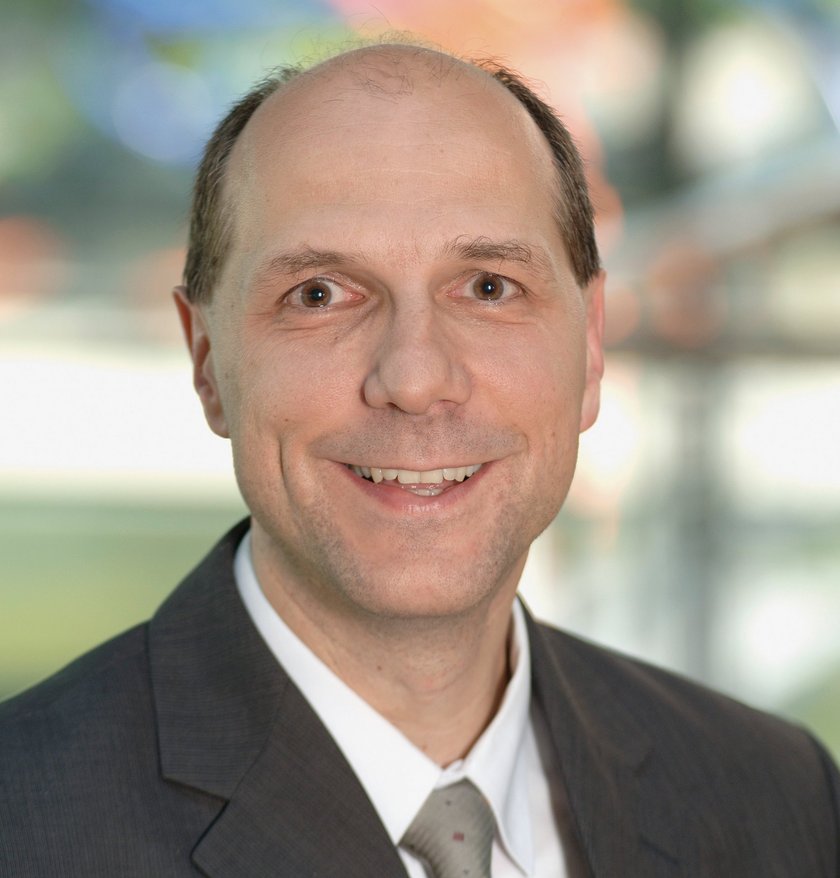
Prof. Dr. Gerald Huber is Managing Director of various start-ups in the digital health sector and an honorary professor at Neu-Ulm University of Applied Sciences. He has more than 25 years of professional experience in the healthcare sector. Dr. Gerald Huber studied pharmacy in Heidelberg and business administration in Hamburg. He completed his doctorate in pharmaceutical technology at the Free University in Berlin. He is co-founder and Executive Advisor of the Schwäbisch Gmünd-based company DiHeSys, which specializes in personalized medicines.
How is 3D printing changing the production of medicines?
Prof. Dr. Gerald Huber: Digital printing is one of the top 10 topics of digitalization. Its main advantage is that patients can now receive the exact dose of their active ingredient that they actually need. This can be changed at any time, in the case of prescription medicines, of course, according to the doctor's prescription. In addition, this technology can now be used to flexibly print several active ingredients - in the desired and necessary dosage - in one tablet, for example. Patients will then no longer have to take as many tablets as is currently the case, with the familiar problems of treatment safety and adherence. Pharmaceutical staff will primarily print in pharmacies and hospital pharmacies. And here we have already summarized the main changes. The finished formulation is now produced decentrally in the pharmacies that print. Cartridges containing active ingredients are produced centrally and then delivered to the pharmacies. The main changes are therefore that digital printing of medicines leads to decentralized production and that significantly less raw material is required, as only what is actually needed for the patient is printed. Today, we discard around 50% of the medicines we produce, with the corresponding economic and ecological consequences. As a rule, 3D-printed dosage forms also require the use of fewer excipients. This means that the tablets are smaller and therefore easier for patients to swallow.
What are the main advantages over traditional production methods?
Prof. Dr. Gerald Huber: The use of resources is much more efficient, as only the medicines that are actually needed for a successful therapy are produced. This is a great advantage in terms of the CO2 balance, but also in terms of overall costs. Disposal costs are drastically reduced. The overall costs of the therapy will also fall, as the constantly adjusted dose will result in fewer side effects, which can also lead to treatment discontinuation. The treatment goals can be achieved more effectively as the dose and strength of the active ingredients can be individually adjusted at any time. There will also be fewer unnecessary visits to specialists and hospitals and a reduction in absenteeism from work. The total direct and indirect therapy costs will thus be reduced. As already mentioned, the process is much more efficient. Production, logistics and outcome are greatly optimized. And - most importantly - the patient benefits, as he or she is always optimally cared for thanks to the customized therapy.
How safe is 3D printing?
Prof. Dr. Gerald Huber: The entire process, from the development of pharmaceutical substances to the manufacture of medicines and their distribution, is regulated and safeguarded by law worldwide. Naturally, the 3D printing of medicines must also undergo these safety measures and prove that it complies with these criteria. Only after successful documentation and proof of assured quality can these processes be used on patients. This has already happened; the first patients have already received digitally printed medicines.
In order to guarantee this safe manufacturing process, the starting materials (cartridges containing active pharmaceutical ingredients), the printer, the software that controls the printer and also the final product, namely the printed tablet with one or more active ingredients, must be subjected to quality testing. The responsible authorities therefore also monitor this very innovative manufacturing process. It is safe and, thanks to digital technology, generally much more precise and easier to control than the traditional way of manufacturing medicines.
What challenges still need to be overcome before 3D-printed medicines can be used on a large scale?
Prof. Dr. Gerald Huber: The technology has been developed and is ready for use, and the legal framework is of course being adhered to. In order for digitally printed drugs to be scalable and used on a large scale, a lot more active ingredients need to be developed into a printable formulation. In addition, there must be many more projects in the real care environment that demonstrate that quality and safety are also guaranteed in a scaled-up state. Finally, the printed drug must also be paid for. In order to achieve broad scaling, the drugs must be used not only in hospitals but also in outpatient care and their use must be financed. This requires special contracts, which already exist and are being worked on. But the organization behind this also costs time and money. After all, healthcare systems and their financing differ to some extent from country to country. This means that each country, i.e. each healthcare system, has its own form of financing and reimbursement, which must be taken into account. After all, large-scale use also means that it is not only used in Germany, but worldwide.
What prospects do you see for 3D printing in the pharmaceutical industry, but also in hospitals and pharmacies?
Prof. Dr. Gerald Huber: Since personalization and individualization are a current and future key trend in pharmacotherapy, printing - and thus the individualization of active ingredients for oral administration (more than 70% of the drugs used worldwide are solid dosage forms such as capsules or tablets) - will become increasingly important. This offers opportunities and possibilities for service providers such as clinics, medical practices and pharmacies, but also for the industry. After all, not only active ingredients and formulations currently available on the market are printed, but also drugs that are currently being researched and will be launched on the market in the future. It is to be expected that the future belongs to printed medicines, so the question is not whether this form of production, including all the disruptive changes, will come, but when. The technology of 2D and 3D printing can be used worldwide. Ultimately, almost all patients with certain diseases can benefit from it.
Thank you very much for the interview!
The content and statements presented in the interviews reflect the perspective of the interviewees and do not necessarily reflect the position of the editorial team.


