
Noa Lisanne Bartu
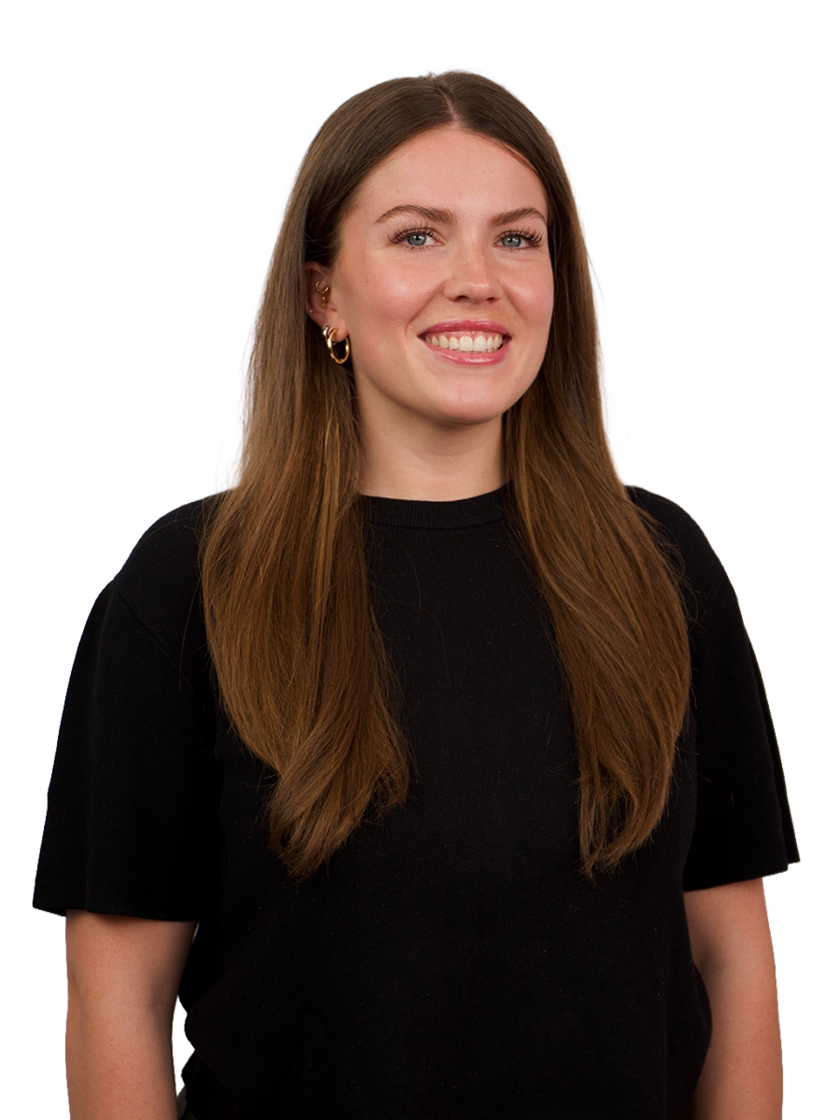
Study programmes: Information Management and Corporate Communications (BA) (opens in a new window) / International Entrepreneurship, Digitalization and Sustainability (MSc) (opens in a new window)
Employer: Sparkasse Ulm
Position: Sales Promotion Specialist
Contact:LinkedIn-profile (opens in a new window)
Whether it was a straight path or one with detours: what was your school career like, and what interests did you have when you were younger?
It became clear to me at an early age that I didn’t just want to think about things, but actively make a difference. Creativity and social engagement shaped my entire school career. Supporting people and making a meaningful contribution were my driving forces right from the start. At the same time, I’ve always enjoyed designing things and doing creative work. Looking back, it was therefore almost inevitable that I would choose a degree programme that combines all these values: entrepreneurial thinking, social responsibility and sustainable, forward-looking action.
Why did you choose the IEDS degree programme at HNU?
When the IEDS degree programme was first launched at HNU, I was immediately impressed by the combination of entrepreneurship, digitalisation and sustainability within a single programme. I was looking for a Master’s programme that was not only academically rigorous but also offered genuine relevance to the working world of tomorrow. The flexibility in choosing optional modules, the international environment and the opportunity to spend a semester abroad gave me the chance to tailor my course of study to my own needs and set my own priorities. This sets the programme apart from traditional Master’s programmes.
What advice can you give to young people who are looking for the right degree programme?
Listen to your own interests rather than to supposed prestige or the expectations of others. Take the time to reflect honestly on where you see yourself in a few years’ time and whether the degree programme you’ve chosen can lead you there. Taking a close look at the course content, talking to graduates, and asking yourself which skills you really want to develop can help you with this. A Master’s degree is more than just the next step in your education: it shapes your way of thinking, opens up new perspectives and challenges you to develop further. Ultimately, the right path is the one that not only advances your academic knowledge but also inspires and convinces you in the long term.
What would you say to someone considering applying to IEDS?
What sets IEDS apart is its combination of academic depth and practical relevance. Its international focus brings together people from diverse backgrounds and with varied perspectives, creating an environment that is enriching both professionally and personally. At the same time, the flexible choice of electives allows students to tailor their studies to their individual interests, whilst the interdisciplinary approach provides precisely the breadth of knowledge that is increasingly in demand in today’s dynamic job market. Studying at IEDS therefore means more than just an academic qualification: it shapes the way you think, fosters the ability to understand complex interrelationships, and opens up a wide range of career prospects. Those who choose this programme not only gain subject-specific knowledge but also develop a versatile way of thinking that extends far beyond individual disciplines – and that is precisely where the programme’s true added value lies.
Which aspects of the course, projects or experiences have particularly stuck in your memory?
Right from the start, I was particularly excited by the opportunity to work on projects based on real-world challenges faced by companies and organisations. The difference compared to purely theoretical work is very noticeable: over the course of a whole semester, you see how initial ideas gradually develop into well-founded concepts. One particularly memorable experience was the hackathon in the ‘Entrepreneurial Ideation and Prototyping’ module, which I took right at the start of my degree. Working with an industry partner, the task was to analyse a real-world problem within a short timeframe and develop a viable solution. Working in a newly formed team with members from different disciplinary backgrounds impressively demonstrated to me just how productive diversity can be when used deliberately. At the same time, the iterative process – from the initial idea through interim presentations to the continuous integration of feedback – has had a lasting impact on my understanding of practical, structured project work.
What advice would you give to students on your degree programme?
Be open to other cultures, group work, and new methods and perspectives! Teamwork, in particular, is a valuable learning experience during which you not only deepen your understanding of the subject matter, but also learn to bring together different points of view, find compromises and present your findings convincingly. Also, don’t be afraid of presentations; instead, make the most of every opportunity to build up your confidence and get into the swing of things. Both are crucial skills in professional life. Make the most of the international environment too: interacting with your fellow students opens up new perspectives and forges connections that often last well beyond your studies.
Semester abroad: Which country did you visit, and what did you get up to during that time?
During my semester abroad, I was at Thomas More University in Mechelen, Belgium. I chose to specialise in International Digital Experience Design. The courses usefully complemented my knowledge and gave me a new academic perspective on digital innovation. Belgium is a culturally and linguistically diverse country which, with its international atmosphere, offered an enriching experience beyond the day-to-day routine of university life.
In your view, what makes the IEDS degree programme special?
IEDS brings together the three inextricably linked disciplines of entrepreneurship, digitalisation and sustainability. To make businesses fit for the future, digital literacy, entrepreneurial thinking and an understanding of sustainable value creation are essential. The flexibility of the electives allows students to tailor their focus to their individual interests, whilst the practical approach ensures that the knowledge gained can be applied immediately. In this way, graduates develop the ability to think across disciplines and operate confidently in a variety of professional contexts.
What advice would you give to all graduates looking for their first job?
Gain practical experience early on, ideally through a part-time student job in a field that interests you. This not only makes it easier to start your career later on and increases your chances of being offered a permanent position, but also gives you a realistic understanding of day-to-day working life. At the same time, it’s crucial to know your own strengths and to communicate them with confidence. An IEDS degree opens up a wide range of opportunities – which makes it all the more important to be able to clearly assess which path suits your personality and your goals.
What was your first job like, and how did you come across it?
Right at the start of my Master’s degree, I began working as a student trainee in the online and performance marketing department at Sparkasse Ulm. I was particularly drawn to the department’s focus, which combines marketing, innovation management, quality management and sustainability – thereby reflecting key themes of the IEDS programme. I took a targeted approach to my job search: I selected companies that matched my interests and actively looked for information on their careers pages. When a suitable vacancy in the team was advertised in late 2025 or early 2026, I quickly realised that I wanted to apply – and I was successful.
How has your degree helped you develop academically, personally or professionally?
My degree has helped me develop significantly on several levels. I have built up a broad range of skills, ranging from strategy development and innovation management through to social entrepreneurship and sustainable business models. On a personal level, it has strengthened my ability to work in a structured manner, to present myself with confidence and to communicate effectively within diverse teams, particularly international ones. Professionally, I now benefit greatly from the fact that my role covers precisely the areas I studied in depth during my degree. This synergy enables me to gain a holistic understanding of interrelationships that goes far beyond individual areas of responsibility and pays direct dividends in my day-to-day work.
Please describe your typical working day. What projects are you working on, and which tasks do you particularly enjoy?
As a specialist in sales promotion at Sparkasse Ulm, I am primarily responsible for marketing aimed at young adults. My responsibilities include the conception, planning and implementation of targeted campaigns that offer clear added value for customers. I particularly appreciate the opportunity to combine creative approaches with socially relevant topics and translate them into effective marketing formats. In doing so, I benefit greatly from the strategic outlook I developed during my studies. This enables me to identify trends at an early stage, place them within a broader context and consistently devise strategies from a broader perspective.
What skills did you develop during your degree that are particularly valuable to you in your professional life today?
The ability to develop concepts and ideas in a structured manner and present them convincingly is particularly valuable. During my degree, I regularly gave presentations to fellow students, lecturers and industry partners. This experience has significantly honed my public speaking skills and communication abilities. Added to this is my sound understanding of strategic thinking, which I have been able to demonstrate in analysing competitive situations, identifying courses of action and applying them to specific business models. These skills are directly applicable in day-to-day professional life and form the basis for well-informed decisions.
What are your career goals for the future?
In the long term, I aim to work in an international context or to set up my own project with an international focus. It is crucial for me to work in an environment that thinks beyond national borders and actively incorporates different markets and cultural perspectives. In doing so, it is important to me that my work makes a measurable contribution – both to the company and to society. During my studies, it became clear to me that economic success and social responsibility are not mutually exclusive. I intend to consistently pursue this approach as I continue my professional development.
How would you finish the following sentence starters?
HNU… “combines academic depth with high practical relevance, thereby creating an environment that fosters both future-oriented professional and personal development in equal measure.”
For me, the IEDS at HNU is… “far more than just a degree – it is a programme that sharpens your way of thinking, makes you aware of your strengths and weaknesses, and leads to genuine personal growth through continuous interaction with others.”


