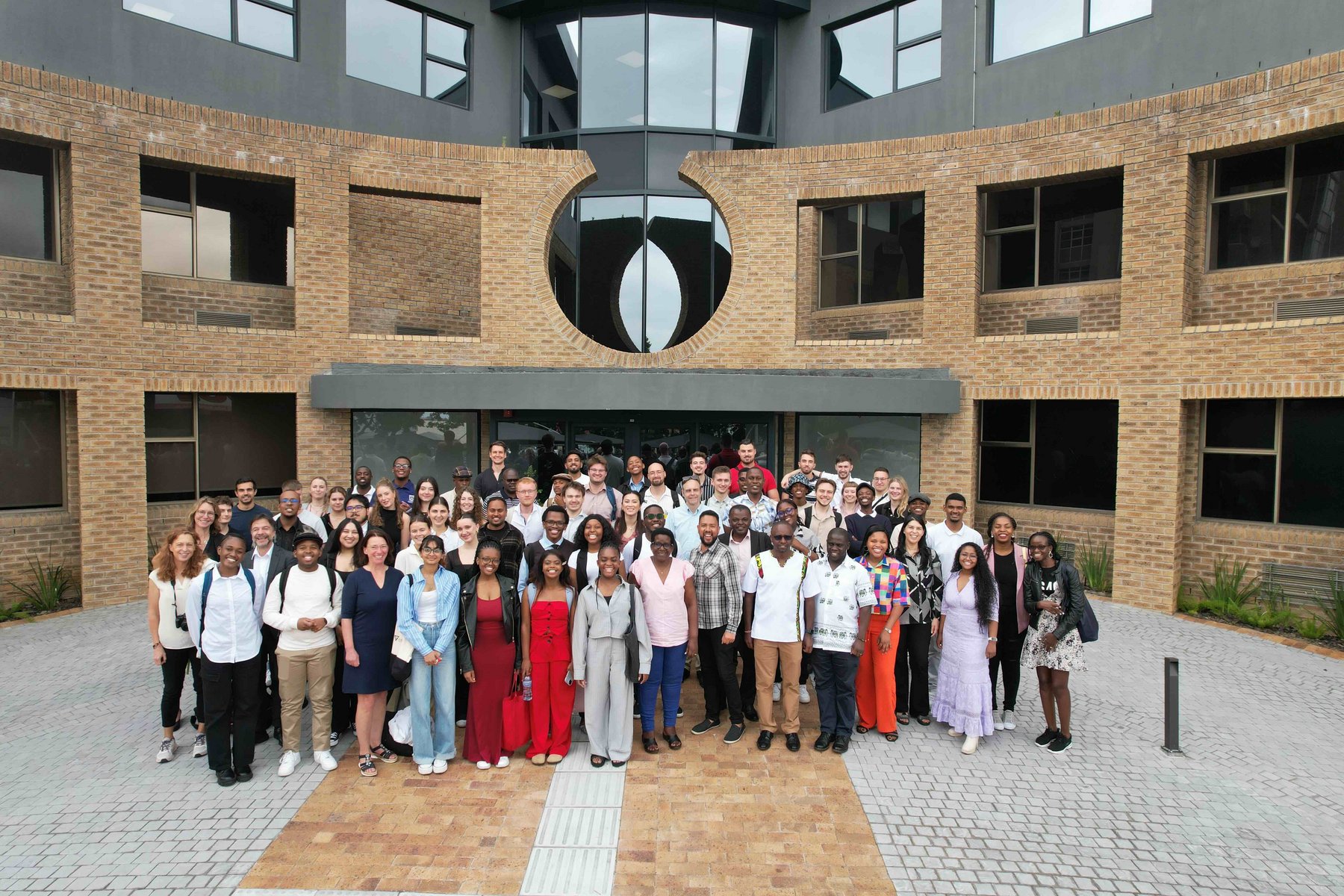
The hackathon was characterized by a wide variety of tasks, all of which were contributed by companies from South Africa and Uganda. The external partners - including five local small businesses, the high-tech think tank Cape Town and Katosi Fish Landing Uganda - were available as customers and interview partners while the use cases were being worked on. Among other things, this involved
- the development of an AI-supported chatbot for a local vehicle rental company to facilitate the input of accident data,
- the branding of a Table Mountain mineral water,
- a new marketing and sales strategy for workwear and
- the development of a website for a provider of vacation apartments.
The students' intensive work on the use cases was successful: their creative and innovative results were rated very positively by the partners involved.
The special thing about this hackathon: the teams developed innovative digital solutions as well as smart business and marketing strategies. The HNU students from the IMUK, DEM and KIM degree programs were able to contribute and expand their intercultural and multidisciplinary skills in this joint event under the direction of Prof. Dr. Barbara Brandstetter, Prof. Dr.-Ing.
“Smart Fish: IoT solutions and business strategies for the Ugandan fishing industry
In addition to the start-up projects, another focus was on the further development of a DAAD project for the Ugandan fishing industry. Here, the participants not only developed an IoT-based traceability solution for transport and cold chains, but also an app for the quality check process for inspectors. This app is intended to help standardize and optimize the inspection and traceability of fishery products along the supply chain. The “Smart Fish” project is a running case and continues work that was already started at HNU in the June hackathon this year. As a result of the November hackathon, not only was the IoT solution technologically improved, but initial business strategies were also developed to prepare the solution for the Ugandan market. This strategic focus prepares for the next project phases: In May 2025, the teams will test their technologies and processes under real conditions in Uganda and present them to local stakeholders. Building on this, the next project phase will follow in June 2025 in the form of an Entrepreneur Workshop at HNU.
Provides real added value: the intercultural combination of theory and practice
This example shows the special nature of the DAAD project “Digital Logistic Services and Entrepreneurship” (DLSE): it combines the inclusion of real customers and use cases in international teaching, the development of students' skills in digital innovation and entrepreneurship and intercultural collaboration. In addition to the design and implementation of the Master's program “Digital Logistic and Entrepreneurship” at the UMI and the hackathons, the development of practice-oriented courses is also about enabling African students to complete several months of academically supervised internships abroad. As part of the DLSE program, two UWC scholarship holders successfully completed a five-month internship in software engineering at artiso solutions GmbH in Blaustein. “The hackathon in Cape Town and the networking with companies in Germany and Africa showed once again how valuable the interplay between technology development, strategic planning and intercultural cooperation is,” emphasized Prof. Dr.-Ing. “The combination of theory and practice creates real added value for the students and the partner countries.”
The DLSE project is funded by the German Federal Ministry for Economic Cooperation and Development (BMZ) and the German Academic Exchange Service (DAAD) as part of the SDG Partnerships program. With the hackathon and the planned continuation in Uganda in May 2025, the project is making an important contribution to sustainable development, global networking and practical education. The enthusiasm of the students and the progress made show how international cooperation can facilitate innovative solutions to pressing global challenges.
More about the project
https://www.hnu.de/en/research/projects/projects/digital-logistic-services-and-entrepreneurship-dlse
Contact
Prof. Dr.-Ing. Dany Meyer