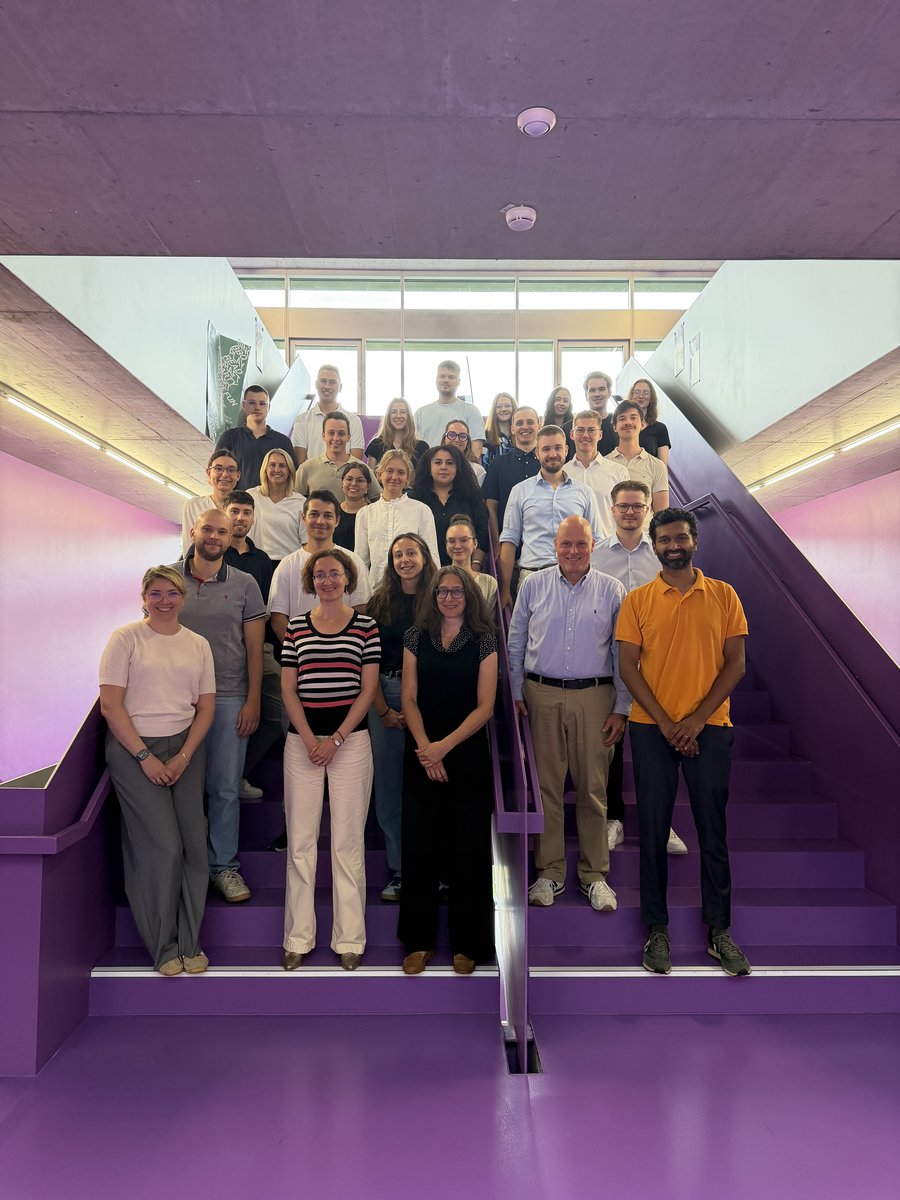
As part of practical project work, six teams of students, led by Prof. Dr Thomas Wunder, worked alongside corporate partners Daimler Buses GmbH, Husqvarna Group Germany and HENSOLDT to tackle current strategic challenges. The results were presented and discussed at a joint closing and networking event attended by international executives.
Strategic foresight supported by AI
The projects focused on topics such as AI-augmented strategic foresight, business resilience and climate transition. The students analysed how global developments such as water scarcity, heat stress and stricter environmental regulations might influence business models in the future.
In doing so, they explored questions including the following:
What impact do different future scenarios have on existing corporate strategies?
How can AI be used to identify and assess developments at an early stage and to provide ongoing support for strategic decision-making?
What risks arise from dependence on natural resources and ecosystem services?
How resilient are business locations to different climate and temperature scenarios?
Sustainability as a strategic success factor
The project work made it clear that sustainable strategic management goes far beyond traditional sustainability initiatives. The focus is on intelligently integrating environmental, social and economic factors in order to secure long-term competitiveness and capitalise on business opportunities.
Another key area of focus was the climate transition of companies. The students developed approaches for deriving Scope 3 climate targets, analysed peer groups based on SBTi data, and drew up recommendations for credible net-zero strategies and their business implications.
Skills for tomorrow’s economy
These projects demonstrate how the role of universities is changing in the age of artificial intelligence: lecturers are increasingly taking on the role of coaches, whilst students use AI as a learning and sparring partner to develop solutions to complex problems independently.
What matters here is not finding the one ‘correct’ answer, but the ability to
- understand complex and ambiguous problems,
- develop individual approaches to solving them,
- analyse strategic interrelationships and
- derive well-founded recommendations for action.
The collaboration with the three corporate partners illustrates how practice-oriented university teaching specifically prepares students for the challenges of a dynamic business world.
Strategic thinking rather than off-the-shelf solutions
In the age of AI, the demands placed on business education are not diminishing, but becoming more challenging. What is required is analytical thinking, strategic foresight and the ability to effectively integrate technological opportunities with business decisions. It was precisely these skills that students on the Advanced Management Master’s programme were able to demonstrate in their practical projects.