
The interview partners
Prof. Dr. Patrick Da-Cruz is Professor of Business Administration and Health Management at the Faculty of Health Management at Neu-Ulm University of Applied Sciences (HNU) and Academic Director of the MBA programme in Leadership and Management in Healthcare. Before joining HNU, Mr. Da-Cruz worked for renowned strategy consultancies in the pharmaceutical/healthcare sector and held management positions in healthcare companies in Germany and abroad.

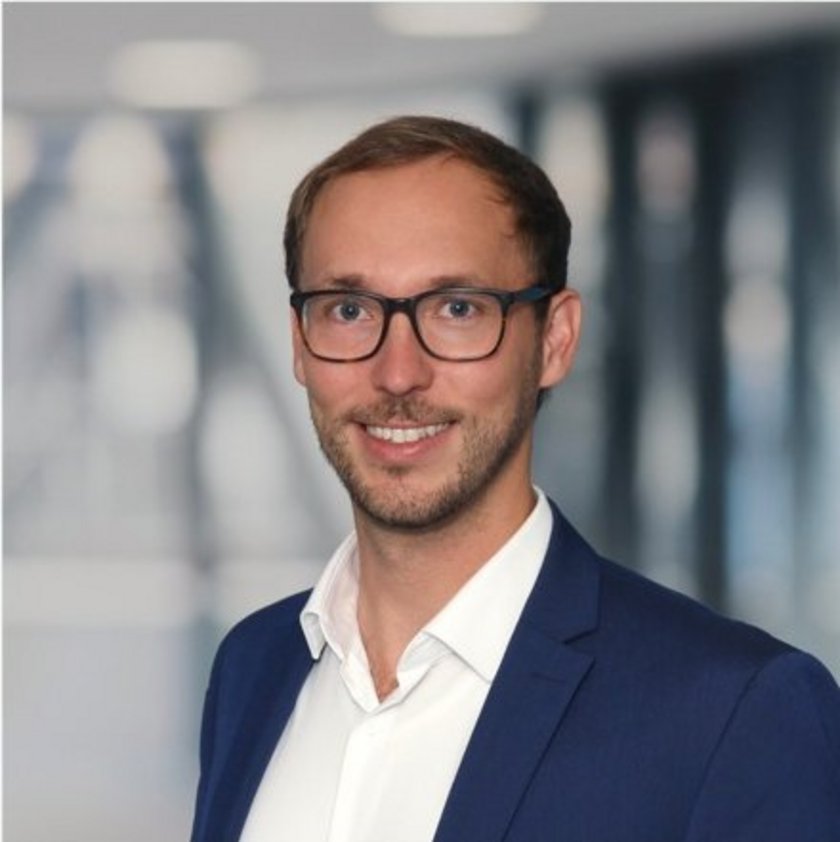
Jan Baumann is a physician and business economist with a focus on digital transformation, interprofessional teamwork and AI in healthcare. After working in anaesthesia and intensive care medicine, in hospital management as project manager of a central emergency room and on the introduction of physician assistants at a university hospital, he gained consulting experience at a large IT consulting firm. He is currently undergoing further training in general medicine and is founding SHAPE Consulting UG, where he and his team advise on innovation and artificial intelligence in healthcare.
Which occupational groups are currently gaining importance in outpatient care in Germany?
Jan Baumann: Our healthcare system is currently under pressure in many areas, whether technical, demographic or financial. As a result, outpatient care is also undergoing profound change, both now and in the future. In addition to traditional professions such as medical assistants, we are seeing a clear rise in ‘new professions’ and a trend towards interprofessional teams.
Qualified care assistants such as VERAHs (care assistants in general practices) or NÄPAs (non-medical practice assistants) are already indispensable in practices. Within a well-defined framework, they can take on some delegable medical tasks or look after selected patient groups, thus enabling a more flexible organisation of practice procedures.
Qualifications such as ‘digi manager’, which has been offered by the Westphalia-Lippe Association of Statutory Health Insurance Physicians for several years, are also particularly interesting. In practice, these managers actively support doctors in the planning, implementation and integration of digital processes – from electronic patient records (ePA) and TI applications to video consultations and AI-supported tools. The aim is to relieve medical professionals of organisational and technical burdens, thereby building a bridge between patients, everyday practice and technology.
In addition, physician assistants (PAs) are also becoming increasingly important. They can also provide valuable support to doctors and teams in practice management and treatment. In the inpatient sector, I see future opportunities for case managers, who will become digitally supported guides for patients, helping them navigate the German healthcare jungle.
Why is that? Why are these professions becoming so important right now?
Jan Baumann: There are several reasons for this. On the one hand, the complexity of organisational and administrative tasks in practices is increasing – and the IT landscape is also changing rapidly. The example of the digi manager shows that successful digital transformation is hardly possible without the appropriate specialist staff. This new role is a response to growing demands: it takes active responsibility for designing digital processes, provides training for the team and keeps knowledge of legal developments such as TI and ePA up to date.
However, the ongoing shortage of skilled workers also plays a major role. Practice owners must focus more on employee retention, as recruiting new skilled workers is often becoming a challenge. Employees who can develop into new, meaningful roles identify more strongly with the practice, which creates stability and an attractive working environment.
How does this compare internationally? Do you have any examples from abroad?
Jan Baumann: Yes, this trend is not a German phenomenon. In Anglo-American countries and the Netherlands, professions such as physician assistants have been working successfully for years, including in the outpatient sector. There, they act as equal members of GP teams. In England, there are highly specialised professionals known as advanced nurse practitioners who work closely with their medical colleagues to care for certain diseases and patient groups quite independently. Teams there are often much more interdisciplinary, and roles that are still new here have long been integrated very successfully into patient care through competence profiles and close supervision.
How exactly does this change interprofessional collaboration within the team?
Jan Baumann: For such teams to function really well, clear competency profiles are needed for each role. Transparency about tasks, existing qualifications and interfaces is crucial – everyone needs to know who is responsible for what and which activities can be taken on by whom.
Open and interprofessional communication is then the top priority. For us doctors, this also means developing leadership skills within the team – a key challenge, especially for young doctors, as this is not something that is currently taught during their studies. How do we become team players, moderators and process managers? Ultimately, everyone benefits when teamwork is conducted on an equal footing and is continuously reflected upon.
What impact do the new professional groups have on access to the healthcare system and patient satisfaction?
Jan Baumann: The contribution to better access to care is considerable. VERAHs, NÄPAs and PAs in particular make it possible for home visits to continue in rural areas, even when doctors' time and density are scarce. They can ensure that patients receive safer and more continuous care than would otherwise be the case through the use of telemedicine.
However, it is also important to mention that acceptance among patients depends on good communication about the respective roles. PAs can, for example, prepare discussions with patients, clarify general questions during initial consultations and pass on specific medical questions to their medical colleagues. A clearly structured process is crucial for this. These requirements can then also be transferred to AI-supported assistance, for example. Here, too, it should be explained transparently how this works and how decisions are made.
How can new professional groups be successfully integrated into healthcare facilities without overburdening the structures?
Jan Baumann: This works best step by step – with a targeted and iterative implementation strategy.
First, a healthcare facility should carefully assess where new roles or tools are actually needed in the current structures and what is to be achieved with them. Existing and well-functioning structures usually do not require completely new roles. Sometimes it can also help to specify existing roles or expand them to include additional competencies.
It is advisable to discuss this with the teams and start where the teams are open to change and where there is a need for action. Here, you can then provide targeted support to committed employees and train them for new tasks. These colleagues already know the team and the processes and can act as multipliers in the course of the project. This results in successful pilot projects that help to gain experience, identify potential problems at an early stage and initiate improvements. Word then quickly spreads about how helpful and beneficial the new job profiles are. The insights gained can then be gradually transferred to other departments.
Another success factor is well-designed induction plans and transparent job descriptions that provide all employees with clarity about the distribution of tasks and responsibilities. It remains very important that the teams stay on the ball, give each other regular feedback and thus continuously develop their collaboration. In this way, we can succeed in improving local healthcare with innovative approaches.
Thank you very much for talking to us!
The content and statements presented in the interviews reflect the perspective of the interviewees and do not necessarily correspond to the position of the editorial team.


