Studying without A-levels? It's possible!
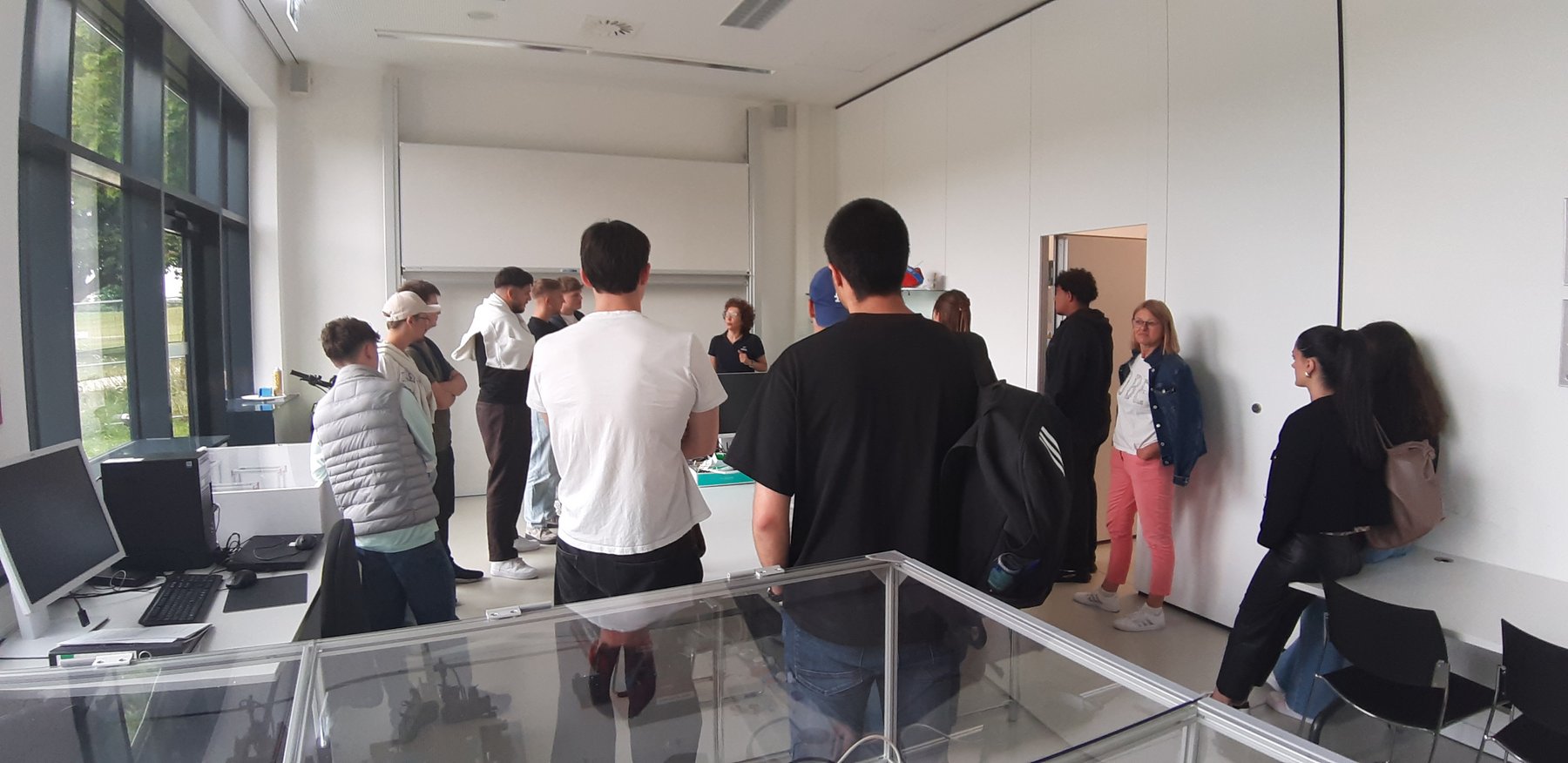
Oliver Kunze, Dean of Studies at the Faculty of Business Administration and Economics, together with Dr Galiya Klinkova, presented the degree programmes Business Administration (B.A.) with the Logistics & Supply Chain Management profile and Industrial Engineering (B.Eng.) with the Logistics profile. The focus was particularly on the question of how vocational school students can also take up a degree programme without an Abitur.
Prof Dr Oliver Kunze explained various entry routes - for example, via completed vocational training with subsequent professional experience and an entrance examination or via the completion of a master craftsman's examination. This information met with great interest among the participants, particularly among high-achieving vocational school students with academic ambitions as well as practice-oriented drop-outs who would like to reorient themselves.
3D printing is changing logistics
Another highlight was the introduction to 3D printing and its application in logistics. Prof. Dr Oliver Kunze explained how additive manufacturing can revolutionise traditional logistics - for example by digitally storing construction plans instead of physical parts or by printing components locally on site.
Guests were able to experience three different printing technologies live in the HNU LogLab:
- MEX (Material Extrusion)
- PBF (Powder Bed Fusion)
- VPP (Vat Photo Polymerisation)
Not only were the machines shown, but finished components were also presented for guests to touch. Dr Galiya Klinkova answered numerous questions from the vocational students and discussed specific application examples.