Artificial Intelligence and Health Informatics (MSc)
Transforming Healthcare: Artificial Intelligence, Health Informatics, Data Strategies and Entrepreneurial Leadership
This interdisciplinary, international, and consecutive Master's programme equips students to actively shape the future of healthcare. It combines expertise in Artificial Intelligence, Medical Informatics, Strategy, Leadership, and Entrepreneurship. In part-time format, theoretical knowledge can be applied directly in practice while deepening language skills. Students learn to develop and implement AI solutions for healthcare, use data responsibly, and address ethical, data protection, and regulatory requirements.
The programme provides competencies and skills in the areas of
- Artificial Intelligence, Health Informatics
- Medicine and Nursing
- Strategy, Leadership, Entrepreneurship
Important notice
The Master’s programme Artificial Intelligence and Health Informatics (M.Sc.) will not be offered in the winter semester 2026/27 and will commence for the first time in the sommer semester 2027.

What are you interested in?
About the programme
Contents of the programme
In the first semester, you will gain a strong foundation in key subject areas such as Medicine and Nursing, Medical Informatics, Artificial Intelligence, and Strategy and Entrepreneurship in Healthcare. You will also develop essential methodological skills that prepare you for interdisciplinary work in this dynamic field.
In the second semester, you will deepen your understanding of data processing, process design, and the ethical and regulatory frameworks of healthcare. Alongside your courses, you will work on a project-based assignment, applying your knowledge to a practical research question.
The third semester focuses on advanced data analysis and the responsible management of AI systems and health data. You will explore a hands-on topic and have the opportunity to develop your own innovative ideas and solutions for real-world challenges in healthcare.
In the fourth semester, you will independently tackle a complex research topic within Medical Informatics, Artificial Intelligence, or Strategy and Entrepreneurship in Healthcare. You will first build the methodological and organisational basis for your Master’s thesis before developing and completing your own research project - demonstrating your ability to approach a specialised problem with scientific rigour, think critically, and present your results with confidence.
Structure of the programme
1st semester
- Health Practice
- Health Informatics
- Artificial Intelligence in Healthcare
- Strategy and Entrepreneurship in Healthcare
2nd semester
- Health Data Engineering
- Health Process Management
- AI Ethics and Regulations in Healthcare
- AI/Health Innovation Project I
- Elective Module I
3rd semester
- Health Data Analytics
- AI Governance and Health Data Govermamce
- AI/Health Innovation Project II
- Elective Module II
4th semester
- Master Thesis Seminar
- Master Thesis
Special features
- Language of instruction: English
- Part-time format
- Optional semester abroad
- Focus on future-oriented topics
- Interdisciplinary and intercultural
- Specialization in German is possible through additional modules at the university
Career perspectives
Shape the future of healthcare with Artificial Intelligence, Health Informatics, and leadership skills!
This master’s programme prepares you for leadership roles at the interface of Artificial Intelligence, Health Informatics, and Management. You will learn to strategically develop data-driven innovations, implement them technically, and lead digital transformation processes - all in a practical part-time format.
Your career opportunities:
- High-tech companies, pharmaceutical industry, start-ups, hospitals, research institutions
- Innovation departments, Health Informatics, public health, consulting
Typical roles:
- AI professional in healthcare
- Medical / Health Informatics specialist
- Digital health consultant
- Project manager for AI projects
- Business developer or product manager in health AI
- Researcher in medical AI
Practice and stays abroad
Study abroad stays are optionally possible, ideally in the 4th semester.
Contributions and fees
There are no tuition fees. A semester fee (administrative fees and solidarity fee) is charged per semester. Information on this can be found on the page "HNU - Fees and Re-registration (opens in a new window)".
Study documents
Module handbooks
Study- and examination regulations
- Studien- und Prüfungsordnung (SPO) für den Masterstudiengang Artificial Intelligence and Health Informatics der Hochschule für angewandte Wissenschaften Neu-Ulm vom 24.03.2026
(opens in a new window)Studien- und Prüfungsordnung (SPO) für den Masterstudiengang Artificial Intelligence and Health Informatics der Hochschule für angewandte Wissenschaften Neu-Ulm vom 24.03.2026, gültig ab 01.09.2026 - Study and Examination Regulations AIH
(opens in a new window)Study and Examination Regulations (SPO) for the Master’s programme Artificial Intelligence and Health Informaticsat the Neu-Ulm University of Applied Sciences
General examination regulation
- Current general examination regulations
(opens in a new window)Current general examination regulations - Aktuelle Allgemeine Prüfungsordnung (gültig ab 10.02.2025)
(opens in a new window)Aktuelle Allgemeine Prüfungsordnung (gültig ab 10.02.2025)
Dual studies
In a dual master programme, you complement the theoretical knowledge gained in lectures with practical expertise. From the very beginning, you gain valuable hands-on experience in a company of your choice. Discover the benefits of a Master's degree with additional practical experience at the HNU: Combine in-depth academic knowledge with real-world experience and benefit from a salary provided by your partner company while you study.
Although the term “Dual studies” is not commonly used in English-speaking countries, it has become a well-established concept in Germany. Internationally, it may also be referred to as a dual study programme, cooperative education, work-study programme or work-integrated learning.
Voices on the degree programme
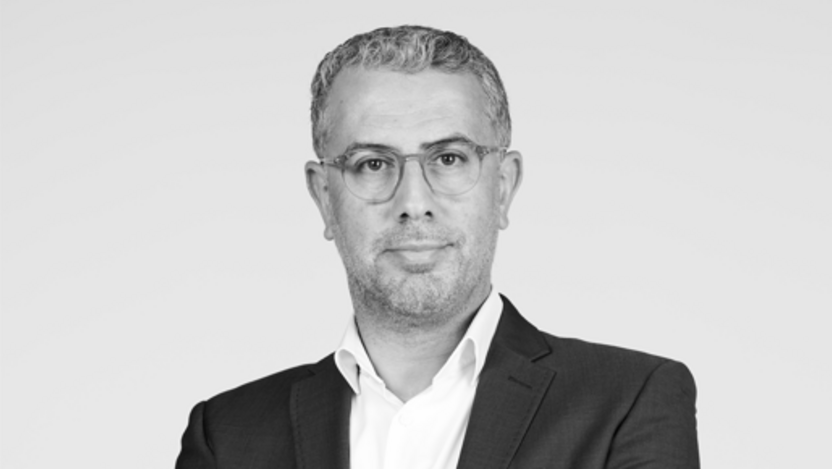
The future of health is intelligent - Be part of IT. Healthcare is changing - Artificial Intelligence and Health Informatics are leading the way, reshaping healthcare through digital innovation, data-driven decisions, personalized care, and precision medicine. Health Informatics powers this transformation by organizing high-quality data, while AI turns it into insights for smarter decisions. Together, they create faster, more precise, human-centered healthcare. Study AI and Health Informatics to be at the heart of this (r)evolution.
Requirements & Application
Admission requirements
- Admission requirements in accordance with the university-wide enrolment regulations.
- Completed university degree with at least 210 ECTS credits in one of the following (examples): degree programmes in Computer Science, Computer Engineering, Software Engineering, Artificial Intelligence, Data Science or Digital Health.
- If you hold a bachelor’s degree with only 180 ECTS credits, the remaining 30 ECTS credits must be compensated by providing evidence of one of the following:
- Co-authorship of a research publication (research paper) in English, or
- At least 6 months of full-time, verifiable professional experience after completion of the bachelor’s degree in a role relevant to the programme’s content (to be demonstrated by employment contract and/or reference letters) or
- Proof of an additional 30 ECTS from another previous degree programme.
- Applicants with a Bachelor’s degree from an institution outside the Lisbon Convention must provide a Graduate Record Examination (GRE) General Test.
- Language requirements
- English level B2 for all applicants
- German level A1 (for international applicants)
- Beside English-taught elective modules, German-taught elective modules are available (2nd/3rd semester). For these, German B2 level is required – which you can acquire during your first semester. This is not an admission requirement.
- This degree programme is admission-free.
Application periods
Winter semester: 02.05. – 15.07.
For non-EU applicants:
Winter semester: 02.05. – 15.07.
The programme is only offered in the winter semester.
Application
You can apply for the degree programme in our application portal within the application deadlines:
FAQ
My degree does not reach the required 210 ECTS. What can I do?
The following text provides an overview of the key points from the Enrollment Statutes. In case of deviations, the text of the enrollment statutes (opens in a new window) is binding.
In the case of a Bachelor's degree with only 180 ECTS credits, the existing qualification gap of 30 ECTS credits must be filled by proving or successfully completing one of the following prior achievements:
- Co-authorship of a research publication in English (research paper).
- At least 6 months of verifiable full-time professional experience after obtaining the bachelor's degree in an occupation relevant to the study content of the degree program (evidence by employment contract and/or employment references)
- Proof of additional subjects taken amounting to 30 ECTS from a previous degree programme
What average mark is required?
The average mark on your transcript from a university or university of applied sciences must be 2.5 or better.
If you completed your degree outside of the German school system, please take note of the additional rules for applying with an international degree.
How can I improve my bachelor grade? (Admission test: GTEBS)
It is optionally possible to take a voluntary entrance test (GTEBS) to improve the bachelor's degree grade.
In principle, the test can be taken as long as you wish before you start your studies or complete your bachelor's degree. It is valid for all future applications. At HNU, you will achieve the following with the test: If you belong to the best 60%, your Bachelor final grade will be improved by 0.3, if you belong to the best 50% by 0.5 and if you belong to the best 40% even by 0.7.
For more information about the test, visit the Institute's site:
Institute for Test and Talent Research (opens in a new window)
The registration for the test "GTEBS" is possible on the following page of the institute:
Registration for GTEBS (opens in a new window)
What qualification is required?
In order to be admitted, you must have a degree from a university or university of applied sciences with a minimum of 210 ECTS credits (or an equivalent degree).
If you completed your degree outside of the German school system, please take note of the additional rules for applying with an international degree.
What language skills are required?
For the master’s degree programmes offered in English, you will need to submit evidence of level B2 English language skills with your application. This can be done in the following ways:
- corresponding results from a recognised language test (e.g. TOEFL, IELTS)
- evidence of adequate language skills from school or university transcripts
- completion of a degree programme that was verifiably taught entirely in English
- evidence that English is your native language
Non-native speakers of German are also required to provide evidence of German language skills at level A2 when enrolling.
Contact

Questions?
Our smart AI chatbot StudiAssist will quickly help you with any questions about the degree programme.
If you need further support or advice beyond this, simply send us a message.
Head of the degree programme & subject advisor:
Professor Dr. Fady Albashiti